Between the Lines: What Museum Curators Wish Every Visitor Understood About Exhibition Labels
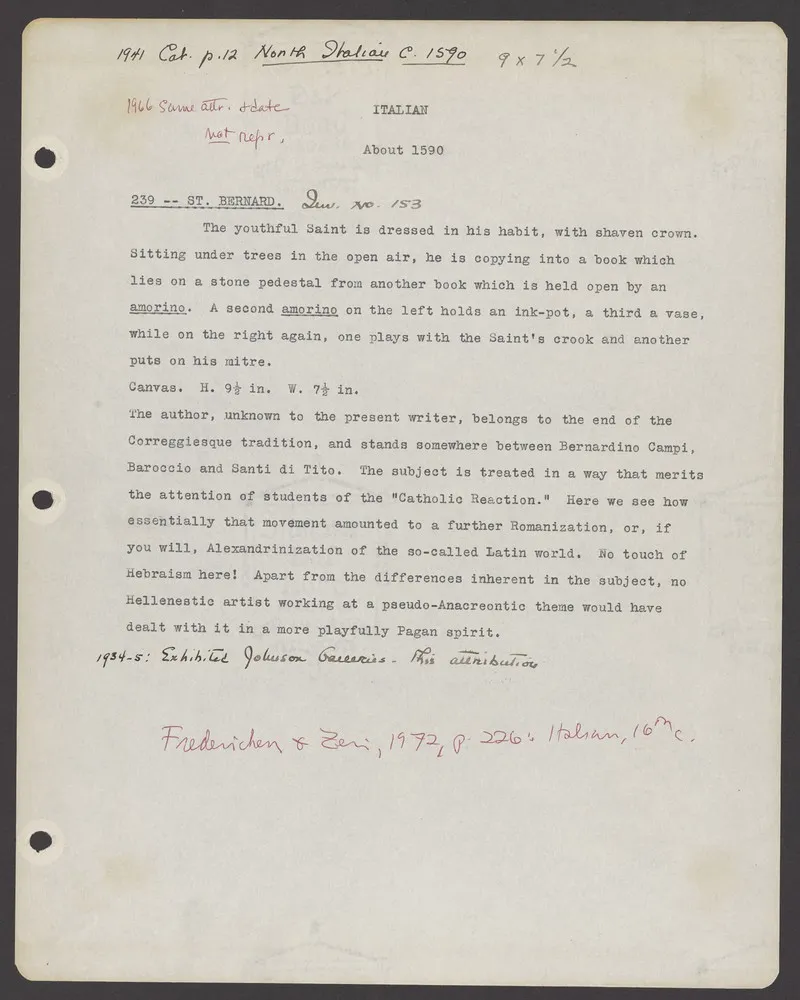
Photo: Philadelphia Museum of Art, CC0, via Wikimedia Commons
Stand in front of any major painting at the Metropolitan Museum of Art, the Art Institute of Chicago, or the Smithsonian American Art Museum, and you will find a small rectangular card affixed to the wall nearby. It tells you the artist's name, the date, the medium, and perhaps two or three sentences of context. What it almost certainly does not tell you is the decade of scholarly argument that shaped every word, the competing interpretations that were edited out, or the ethical questions that kept curators awake at night.
At Ask A Curator, we believe that understanding how art is presented is just as illuminating as understanding the art itself. So we reached out to curators across the United States and asked a deceptively simple question: What do you wish the label could say?
The answers were revelatory.
The Tyranny of the Word Count
Most museum visitors do not realize that exhibition labels are subject to strict institutional guidelines on length—typically between 50 and 150 words, depending on the museum and the type of display. For a curator who may have spent three years researching a single object, that constraint can feel nothing short of brutal.
"We sometimes joke that writing a label is like writing a tweet about a novel," said one senior curator at a major East Coast art museum, who asked to remain anonymous to speak candidly about internal processes. "You have something enormously complex—a work that exists within layers of historical, social, and personal context—and you are asked to distill it into a paragraph that an eight-year-old and a PhD can both engage with."
The challenge is not merely one of space. It is also one of audience. American museum visitors arrive with wildly varying levels of art historical knowledge, and labels must perform the near-impossible task of being simultaneously accessible and intellectually honest.
Provenance: The Story Labels Rarely Tell Fully
Perhaps no subject is more fraught—and more abbreviated—on exhibition labels than provenance, the documented history of an artwork's ownership. In the wake of increased public awareness around Nazi-era looted art and the ongoing national conversation about objects acquired during colonialism, provenance has become one of the most contested areas in American museum practice.
Dr. Melissa Chiu, Director of the Hirshhorn Museum and Sculpture Garden, has spoken publicly about the institution's efforts to make provenance research more transparent. But curators across the country acknowledge that even the most conscientious label cannot capture the full complexity of an object's journey through history.
"A label might say 'private collection, Europe, 1930s to 1950s,' and that phrase is doing an enormous amount of work," explained a provenance researcher at a Midwestern encyclopedic museum. "It is a placeholder for a gap in the record that could mean anything from benign inheritance to forced sale. We know what those gaps often signify, but we cannot always say so definitively in forty words."
The result, curators note, is that labels can inadvertently sanitize histories that deserve scrutiny. Some institutions, including the Museum of Fine Arts, Boston, and the Getty in Los Angeles, have moved toward expanded digital provenance records accessible via QR codes—a development many curators regard as one of the most meaningful evolutions in public transparency in recent memory.
Attribution Debates That Never Reach the Wall
Visitors generally assume that when a label reads "Rembrandt van Rijn," the matter is settled. In practice, attribution is frequently a live and contentious scholarly conversation—one that unfolds over decades and rarely reaches a clean resolution.
The Rembrandt Research Project, a decades-long Dutch scholarly initiative, famously revised the accepted canon of the artist's work, reassigning dozens of paintings previously attributed to the master. American museums holding works affected by those findings faced a delicate communication challenge: how do you tell a donor or a public that a prized "Rembrandt" is now considered a "follower of Rembrandt" without destabilizing trust in the institution?
"The label is the public face of a private conversation that is still happening," said one curator at a prominent New York institution. "When we write 'attributed to' or 'workshop of,' we are signaling uncertainty to specialists, but most visitors read right past that qualifier. They see the name and they move on."
Some curators advocate for labels that more explicitly invite visitors into the uncertainty—language that frames attribution as an ongoing inquiry rather than a closed verdict. A handful of forward-thinking institutions have begun experimenting with exactly this approach, presenting multiple scholarly positions side by side.
The Politics of Interpretation
Beyond facts and attribution lies perhaps the most invisible layer of curatorial labor: the interpretive framework through which an artwork is presented. Every label reflects choices about what matters, whose perspective is centered, and which histories are deemed relevant.
In recent years, American museums have undertaken significant reckonings with the ways in which traditional art historical narratives have privileged certain voices—predominantly white, Western, and male—while marginalizing others. Rewriting labels to reflect more inclusive scholarship is not a simple matter of adding a sentence. It often requires dismantling assumptions baked into the interpretive architecture of an entire gallery.
"We had a label that described a nineteenth-century genre painting in purely aesthetic terms—composition, brushwork, technique," recalled a curator at a Southern art museum currently undergoing a major collection reinstallation. "When we looked at it through a contemporary lens, we realized we were describing an image of enslaved labor as though it were a still life. The revision process took months and involved historians, community advisors, and institutional leadership."
The final label, she noted, is still only 120 words. But every one of them was chosen with a deliberateness that the casual visitor will never fully see.
What You Can Do With What You Know
So what is the takeaway for the curious museum-goer? Curators are nearly unanimous on this point: treat the label as an invitation, not a conclusion.
Many institutions now offer extended digital resources—audio guides, curator-led videos, expanded wall texts in accompanying exhibition catalogues—that provide the depth the label cannot. The Ask A Curator platform itself was built on the premise that direct access to expert knowledge transforms the museum experience. When you have a question that the label cannot answer, ask it.
"The label is the beginning of a conversation," said one curator simply. "The best thing a visitor can do is refuse to let it be the end of one."
Next time you find yourself standing before a work that moves or puzzles you, remember: somewhere, a curator knows far more than the wall will tell you. The story between the lines is often the most compelling one of all.