Whose Museum Is It, Anyway? What Happens When Donor Influence Meets Curatorial Conviction
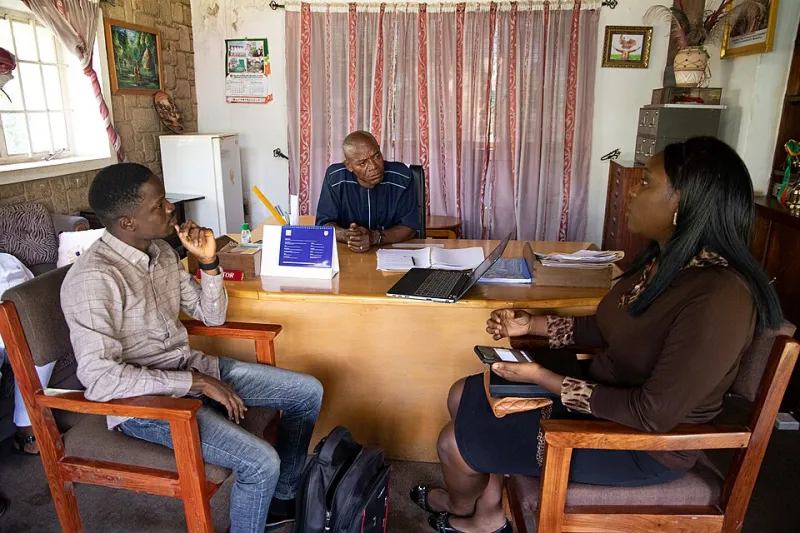
Photo: Timmylegend, CC BY-SA 4.0, via Wikimedia Commons
The donor's name is on the wing. Their portrait hangs near the entrance. Their collection forms the centerpiece of a new permanent gallery. And yet, according to more than a few curators who spoke with Ask A Curator — most requesting anonymity — that same donor's vision of what the museum should be is quietly, persistently at odds with what the curatorial staff believes it could be.
This is not a new tension. But in an era of shrinking public arts funding, growing competition among institutions for philanthropic dollars, and an increasingly scrutinized museum sector, it has become one of the defining pressures of the profession.
The Anatomy of a Donor Relationship
Most major American museums rely on private giving for anywhere from thirty to sixty percent of their operating budgets, depending on the institution. That dependence creates a structural reality that no amount of mission-statement language fully resolves: the people writing the largest checks often have opinions about what those checks should produce.
"It rarely starts as a conflict," explained one senior curator at a large Midwestern encyclopedic museum. "A donor comes in with genuine enthusiasm. They love art. They've been collecting for decades. And then, gradually, you start to feel the shape of their expectations."
Those expectations can take many forms. A donor funding a new acquisitions initiative may express preferences — sometimes gently, sometimes not — about which artists or periods should be prioritized. A patron underwriting a major exhibition may push for interpretive choices that flatter the works they personally own. In some cases, curators described being asked, directly or indirectly, to include donor-owned pieces in shows where those works did not, in their professional judgment, belong.
"You're never handed a list of demands," said another curator, based on the East Coast. "It's more like a series of conversations where the subtext becomes increasingly clear. And you have to decide, at each step, what you're willing to do."
When the Collection Doesn't Fit the Argument
One of the more nuanced challenges curators described involves exhibition narratives — the intellectual arguments that exhibitions are designed to make. A well-constructed show is not merely a display of objects; it is a thesis, supported by carefully selected evidence. When a donor's collection is inserted into that argument for reasons other than scholarly merit, the thesis can quietly unravel.
"I've been in situations where a work was added to an exhibition checklist that genuinely weakened the show," one curator admitted. "Not dramatically — the average visitor would never know. But my colleagues knew. And I knew. That's a hard thing to carry."
The problem is compounded when the donor in question is also a board member, a circumstance that is common enough in American museum governance to constitute something close to a structural norm. Board members hold fiduciary authority over the institution. They hire and evaluate directors. They approve budgets. The power differential between a trustee-donor and a mid-level curator is not subtle.
"Directors absorb a lot of this pressure so that curators don't have to," noted one museum director who agreed to speak on background. "But that only works if the director is willing to push back. And not every director is in a position to do that, politically or financially."
The Unspoken Negotiations
Ask any experienced curator how these situations resolve, and the answers are remarkably consistent: through negotiation, compromise, and the careful management of relationships over time.
Some curators described developing what one called "a vocabulary of redirection" — ways of acknowledging a donor's enthusiasm while steering the conversation toward alternatives that better serve the institution's scholarly goals. Others spoke of building alliances with sympathetic directors or development officers who could absorb donor conversations before they reached the curatorial level.
"You learn to give donors meaningful involvement in ways that don't compromise the work," said one curator who has spent more than two decades at a prominent West Coast institution. "Catalogue essays. Advisory roles. Naming opportunities that don't touch the interpretive content. There's usually a path that honors the relationship without compromising the scholarship."
But those paths are not always available, and the costs of navigating them are rarely acknowledged publicly. Several curators described the cumulative toll of managing these dynamics — the self-censorship that can develop over time, the projects quietly abandoned because the funding landscape made them impractical, the slow erosion of confidence in one's own professional judgment.
Transparency as a Partial Remedy
In recent years, some institutions have moved toward greater transparency about donor relationships and their potential influence on programming. The Association of Art Museum Curators and the American Alliance of Museums have both issued guidance encouraging institutions to disclose when donor-owned works appear in exhibitions, and to clarify the terms under which gifts and grants are accepted.
Whether those guidelines translate into meaningful practice varies considerably from institution to institution. Several curators expressed skepticism that disclosure alone addresses the underlying power dynamics.
"Transparency is necessary but not sufficient," said one curator affiliated with a university art museum. "Telling visitors that a donor lent the work doesn't tell them anything about the conversation that happened before the work was included. The real negotiations are invisible."
What might make a genuine difference, some argued, is structural: stronger curatorial autonomy provisions in donor agreements, clearer institutional policies about the conditions under which gifts can be declined, and — perhaps most importantly — a broader public conversation about what museums are actually for.
The Question Beneath the Question
At its core, the tension between donor influence and curatorial vision reflects a deeper ambiguity in the American museum model. These institutions present themselves as public trusts, dedicated to scholarship, education, and the common good. But they are also, in practice, heavily dependent on private wealth — and private wealth rarely arrives without a perspective attached.
"I think most curators go into this field believing that the work speaks for itself," reflected one longtime museum professional. "And it does. But the work has to get on the wall first. And that's where things get complicated."
For visitors who trust that what they see in a gallery represents the best available curatorial thinking, that complication is worth understanding. The exhibitions that reach American museum floors are the product not only of scholarship and passion, but of negotiation, compromise, and — occasionally — the quiet courage of professionals who chose the harder path when it mattered.
The donor's name may be on the wing. But the integrity of what's inside it belongs, ultimately, to the people who know the difference.