The Algorithm in the Gallery: How Viral Moments Are Reshaping the American Museum
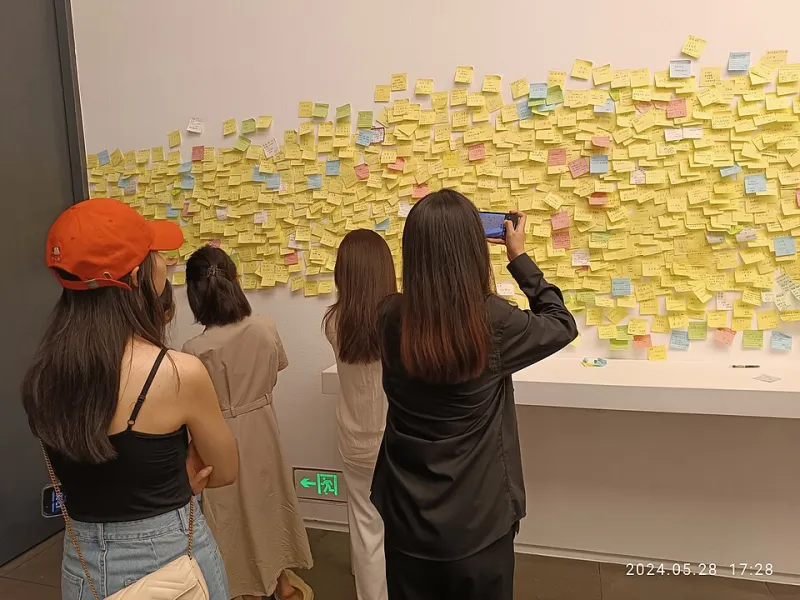
Photo: TANNMY NAISZE Wanguo, CC0, via Wikimedia Commons
In the spring of 2022, a mid-career painter whose work had spent years circulating modestly through regional galleries found herself the subject of a TikTok video that accumulated more than four million views in seventy-two hours. Within a month, three American institutions had reached out about exhibition opportunities. Within six, one of them had confirmed a solo show.
Her story is not unique. Across the United States, museum curators are navigating a new and genuinely unsettling reality: the metrics that once lived exclusively in the domain of entertainment and consumer culture have migrated, quietly but unmistakably, into the exhibition planning process.
Ask A Curator spoke with curators, museum educators, and digital strategists at institutions ranging from encyclopedic majors to mid-sized regional museums to understand how this shift is being experienced on the ground—and whether it represents progress, peril, or something more ambiguous than either.
A New Kind of Audience Research
Museums have always studied their visitors. Exit surveys, membership demographics, and attendance figures have shaped programming decisions for decades. What has changed is the granularity and speed of available data, and the degree to which that data now reflects conversations happening entirely outside institutional walls.
"We used to find out what resonated after the fact," said one curator of contemporary art at a large Midwestern institution. "Now we can watch a work gain traction in real time, before we have made any programming decision at all. That changes the nature of the question you are asking."
Several curators described monitoring social platforms not as a primary acquisition tool, but as a kind of ambient awareness—a way of understanding which artists, periods, and aesthetic conversations are capturing public attention. For some, this feels like a natural extension of the curator's traditional role as a cultural interpreter. For others, it raises immediate concerns about the integrity of the selection process.
Democratization or Distortion?
The optimistic case for social media's influence on exhibition planning is genuinely compelling. American museums have faced sustained and legitimate criticism for the narrowness of their historical programming—an overrepresentation of Western European traditions, a persistent underrepresentation of artists of color, women, and non-Western practices. If viral attention is drawing institutional focus toward artists who have been historically overlooked, the argument goes, the algorithm may be doing corrective work that scholarly consensus was too slow to perform.
"Some of the artists who have broken through via social platforms in the last five years are artists whose work absolutely merited institutional attention long before TikTok existed," said one curator who specializes in twentieth-century American art. "If a viral moment accelerates recognition that was already overdue, I am not sure that is a problem."
The skeptical view is equally coherent. Virality, critics note, tends to reward the visually arresting over the conceptually rigorous, the emotionally immediate over the historically significant. A work that photographs beautifully in a fifteen-second clip may not be a work that rewards sustained scholarly attention or meaningful public engagement in a gallery context.
"There is a real difference between a work that is arresting on a phone screen and a work that changes how you understand an era, a tradition, or a human experience," said one museum director who asked not to be named. "My concern is that we are beginning to conflate those two things."
The Engagement Trap
For institutions navigating budget pressures and declining traditional attendance figures, the temptation to program toward social virality is not merely aesthetic—it is financial. Exhibitions that generate significant social media activity drive ticket sales, membership renewals, and earned media coverage. In an environment where public funding for the arts remains constrained and private philanthropy increasingly demands demonstrable impact metrics, engagement numbers carry real institutional weight.
Several curators described internal conversations in which social media potential was raised as a criterion during exhibition planning—not as the decisive factor, but as a consideration that would have been absent entirely a decade ago. One described it as "a voice in the room that wasn't there before, and that nobody has yet figured out how much authority to give."
The risk, as multiple curators articulated it, is a feedback loop: institutions program toward what is already popular, popular works generate social engagement, engagement data reinforces the programming logic, and the range of art that receives serious institutional consideration quietly narrows. This is a structural concern that transcends the intentions of any individual curator.
Scholarly Rigor in the Age of the Scroll
Not everyone frames this as a crisis. A number of curators argued that the dichotomy between scholarly rigor and popular engagement is itself a false construction—one that has historically been used to gatekeep rather than to genuinely protect intellectual standards.
"The idea that what is popular cannot also be serious is a very old and not very defensible position," said one educator at a museum with a strong community engagement focus. "Some of the most intellectually substantive exhibitions I have been part of were also the ones that generated the most excitement on social platforms. Those things are not inherently in conflict."
What curators across perspectives seemed to agree on was the importance of transparency—both internal and public—about the criteria shaping exhibition decisions. When social engagement is a factor in programming, that fact need not be hidden or treated as a source of institutional embarrassment. What it requires is articulation: a clear account of how that factor is being weighed against historical significance, collection relevance, and scholarly contribution.
Asking the Right Questions
The conversation Ask A Curator had with curators across the country did not resolve into a consensus, and that is perhaps appropriate. The relationship between popular attention and institutional validation has always been contested in the American art world, and social media has accelerated rather than invented that tension.
What is clear is that the question is no longer theoretical. Exhibition calendars are being shaped, in ways both direct and indirect, by the preferences of audiences who express those preferences through platforms that did not exist fifteen years ago. Whether that represents a genuine expansion of who gets to participate in cultural conversation—or a new and subtler form of market capture—may depend less on the technology itself than on the institutional will to keep asking the harder questions.
For curators committed to that project, the challenge is neither to ignore the algorithm nor to serve it, but to remain genuinely curious about what it reveals—and what it obscures.