Dust and Discovery: How Curators Are Turning Forgotten Archives Into the Heart of New Exhibitions
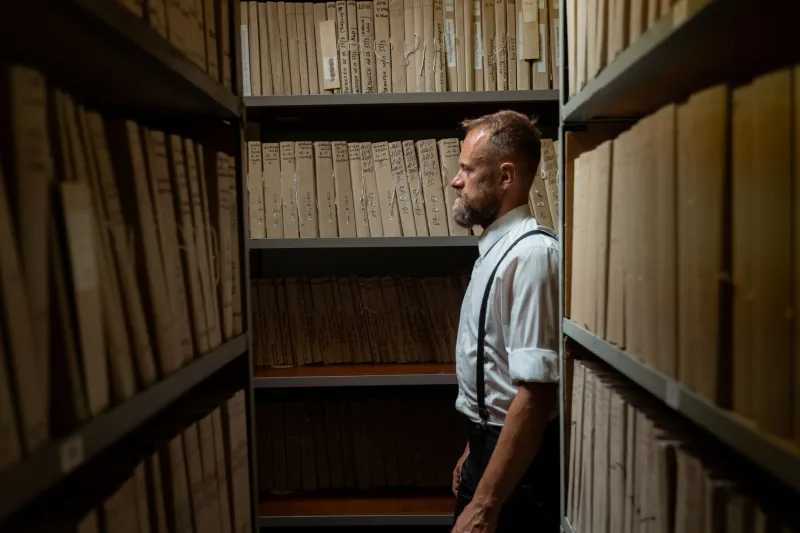
The archive room at a mid-sized American art museum is not, by conventional standards, a glamorous place to spend an afternoon. Fluorescent lighting. Metal shelving. Boxes labeled in fading marker with dates and donor names that may or may not correspond to what is actually inside. And yet, for a growing number of curators, it is precisely here — in the institutional equivalent of a cluttered attic — that the most significant curatorial work of the current moment is being done.
"The collection you can see is only a fraction of what the institution actually knows," said one curator of American art at a major East Coast museum, who has spent the past three years systematically working through her institution's research files from the 1940s through the 1970s. "Everything else is in boxes. And some of what's in those boxes completely changes how you understand what's on the walls."
The Problem with Permanence
American museums have spent more than a century accumulating not just objects but knowledge — correspondence with artists, dealer invoices, conservation reports, exhibition notes, scholarly memoranda, and interview transcripts that document the full life of an artwork in ways that a label can never capture. The challenge has never been a shortage of material. It has been institutional inertia, limited staff capacity, and a curatorial culture that has historically privileged the new acquisition over the deeper investigation of what an institution already holds.
The result is a peculiar paradox: museums that are simultaneously over-resourced in terms of documented history and under-resourced in terms of the capacity to make that history legible to the public. Research that might fundamentally reframe a canonical work sits in a folder three floors below the gallery where the work hangs, accessible only to specialists who know to request it.
"We talk a lot in this field about provenance gaps — the periods in an artwork's history we can't account for," noted one registrar at a Southwestern institution. "But there's another kind of gap that gets less attention, which is the gap between what we actually know and what we've chosen to communicate. Those aren't always the same thing."
What the Boxes Contain
The range of material curators are finding in institutional archives defies easy generalization. Some discoveries are primarily biographical — letters from an artist to a dealer that reveal a completely different set of intentions behind a well-known work. Others are provenance-related, filling in ownership histories that add moral or historical complexity to objects long treated as straightforwardly acquired.
Perhaps most striking are the cases in which archival research surfaces connections between works and communities that the museum has never formally acknowledged. One curator at a Great Lakes regional museum described finding, in a box of mid-century correspondence, a series of letters between the museum's founding director and a local Black artists' collective whose work had been considered and ultimately declined for acquisition in the 1950s. The letters documented not an oversight but a deliberate exclusion — one whose effects were still visible in the permanent collection's demographic composition decades later.
"That discovery didn't just change how I understood those missing works," she said. "It changed how I understood everything we had acquired during that period. The collection suddenly had a negative space — an absence that was just as meaningful as the presence."
That research eventually became the conceptual foundation for an exhibition that used archival documents as primary objects, displayed alongside works from the permanent collection to tell a more complete, and more honest, institutional history.
The Curatorial Case for Archive-Led Practice
Not all archive-driven discoveries carry the weight of institutional reckoning. Many are more quietly revelatory — a sketch that clarifies the compositional evolution of a major painting, a studio photograph that contradicts a long-accepted attribution, a letter that places an artist in a city they were not supposed to have visited during a critical period of their career.
In each case, the question for the curator becomes one of translation: how does material that exists in a document format become meaningful to a gallery visitor? The challenge is not simply logistical. It requires a fundamentally different kind of curatorial thinking — one that treats process and context as legitimate subjects of display, rather than background material to be summarized in a catalog footnote.
"Wall text has a word limit," observed one curator who recently organized an archive-based exhibition at a West Coast institution. "A footnote has even less real estate. But an exhibition can give you as much room as you need to show your work — to let visitors see not just what the object is, but how we know what we know about it. That transparency changes the relationship between the institution and the audience."
An Emerging Standard
Several institutions are now building archive access into their standard curatorial workflows, rather than treating it as an occasional research luxury. Some have hired dedicated archivists with curatorial training, specifically to bridge the gap between institutional memory and public programming. Others are experimenting with digital platforms that make archival material accessible to the public alongside collection records — allowing visitors to trace the documented history of an object in real time.
The shift reflects a broader recalibration in how the field thinks about expertise and transparency. If the archive contains the evidence for curatorial claims, the argument goes, then making that evidence available is not just a practical courtesy — it is an ethical obligation.
"We ask visitors to trust our interpretations," said one curator who has been a vocal advocate for archive-led practice within her institution. "The least we can do is show them where those interpretations come from."