Every Word Counts: The Invisible Craft Behind Museum Wall Text
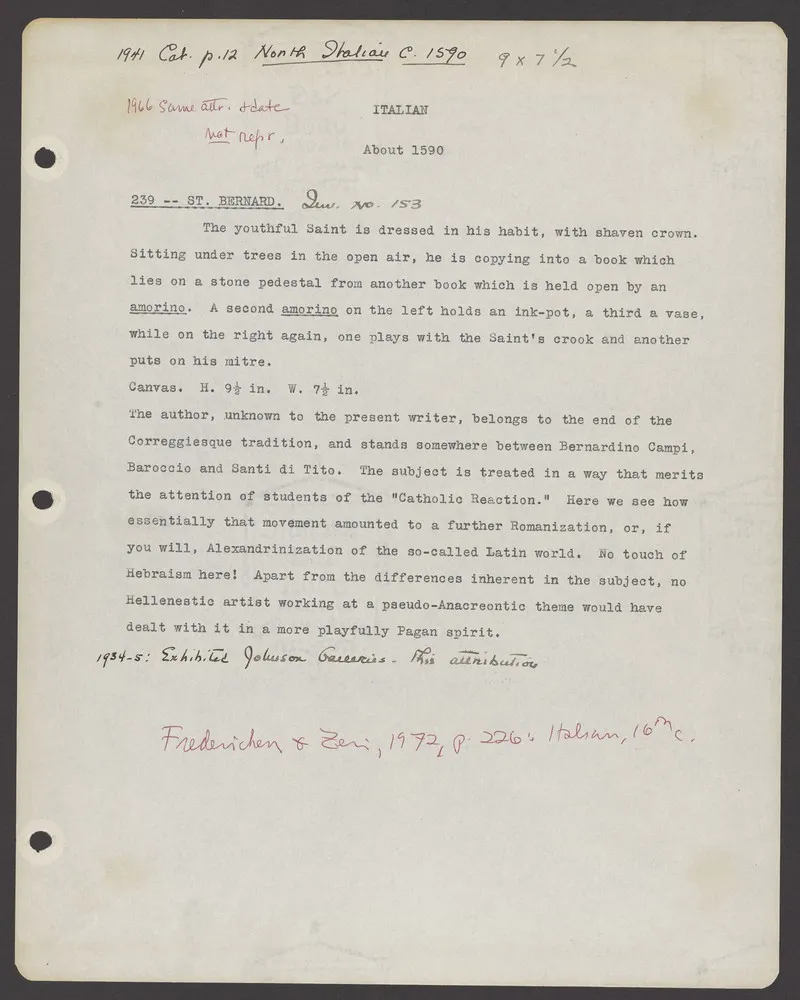
Photo: Philadelphia Museum of Art, CC0, via Wikimedia Commons
Stand close enough to any painting in an American museum and you will almost certainly find a small rectangle of text mounted nearby—modest in size, enormous in influence. Most visitors glance at it for roughly eight seconds before moving on. What they rarely consider is that the paragraph they just skimmed may have taken a curatorial team the better part of a year to finalize, surviving rounds of institutional review, sensitivity readings, and philosophical debate about what a museum is even supposed to say.
Wall text—the formal term is interpretive label—is the primary voice through which American museums speak to their public. It is also, curators will quietly admit, one of the most revealing documents an institution produces. The language chosen, the context omitted, the tone adopted: each decision is a window into how a museum understands its own authority and its relationship with the people walking through its doors.
The Myth of Neutral Description
One of the first things curators will tell you, once they trust that you are genuinely asking, is that neutral wall text does not exist. "Every label is an argument," says one senior curator at a major Northeastern art museum, who asked not to be named in order to speak candidly about institutional pressures. "You are always choosing what to foreground and what to leave out. The idea that you can just describe a painting objectively is a comforting fiction."
Consider something as apparently straightforward as dating. A label that reads circa 1650 versus attributed to the workshop of versus traditionally dated to carries entirely different implications about scholarly confidence. Visitors absorb these distinctions subliminally, even when they could not articulate the difference. The former suggests settled fact; the latter two quietly signal ongoing debate. Which phrasing a museum selects often reflects not just the current state of scholarship, but the institution's appetite for expressing uncertainty in public.
Then there is the matter of attribution itself. For decades, American museums routinely labeled works by women or artists of color with formulations that subtly diminished authorship—phrases like in the circle of or follower of applied with a frequency that independent scholars have since challenged. Several institutions, including the Metropolitan Museum of Art in New York, have undertaken systematic label reviews in recent years, reclassifying works and revising language in ways that meaningfully restore credit to historically marginalized makers.
The Psychology of the First Sentence
Curators who specialize in interpretive writing describe the opening line of a wall label as the single highest-stakes sentence in the entire exhibition. "You have about three words before a visitor decides whether to keep reading," explains a curatorial educator at a large Midwestern museum. "If the first sentence begins with the artist's birth year, you've probably lost them. If it begins with a question or an image that surprises them, you might hold them for the whole label."
This is not merely stylistic preference—it reflects a significant shift in how the American museum profession understands its audience. Through much of the twentieth century, wall text was written for an imagined visitor with a graduate-level familiarity with art history. The label served as a compressed lecture, dense with iconographic analysis and period context. The implicit message was that the museum's job was to transmit knowledge downward.
That model has been substantially reconsidered. Contemporary interpretive practice, influenced by audience research and education theory, increasingly treats wall text as an invitation rather than a briefing. The goal is to activate the visitor's own looking, not to preempt it. "The best label I ever wrote," one curator told us, "is the one where the visitor reads it, looks back at the painting, and sees something they didn't see before. Not because I told them what to see—because I asked them a question that made them look harder."
When Language Becomes Political
Few aspects of curatorial work have generated more internal tension in recent years than the evolving vocabulary surrounding objects with contested histories. How should a museum label describe an artifact acquired under colonial conditions? What language is appropriate when discussing works that depict enslaved people, or sacred objects held outside their communities of origin?
The answers are neither settled nor uniform. Some institutions have moved toward what curators describe as "transparent provenance labeling"—text that openly acknowledges the circumstances under which an object entered a collection, even when those circumstances are troubling. Others have been slower to adopt this approach, citing concerns about institutional liability or donor relations.
What is clear, from conversations with curators across the country, is that the stakes feel higher than they once did. Social media has transformed the reach of a single label: a photograph of poorly chosen wall text can circulate to hundreds of thousands of people within hours, generating scrutiny that would have been unimaginable a generation ago. "We are writing for the room," one curator said, "but we are also writing for the screenshot."
The Unwritten Rules
Ask curators about the informal conventions governing label writing and they will describe a set of norms that are rarely codified but widely observed. Avoid the passive voice where possible. Do not begin consecutive sentences with the artist's name. Never use the word masterpiece without being prepared to justify it. Keep the reading level accessible without being condescending—a balance that proves, in practice, extraordinarily difficult to strike.
There is also the question of length. Research conducted by several major American museums suggests that visitor reading time drops sharply once a label exceeds one hundred and fifty words. Yet curators frequently find themselves with far more to say—about context, technique, provenance, and meaning—than that constraint permits. The result is a kind of enforced compression that demands genuine editorial judgment about what matters most.
"You could write a book about almost any object in our collection," a curator at a prominent West Coast institution told us. "The label is you deciding what one thing a stranger absolutely needs to know. That's actually a profound editorial act, and I think we don't talk about it enough."
Reading the Label Differently
For visitors who want to engage more deeply with what they are seeing, curators offer a simple suggestion: read the label twice. Once before you look closely at the work, and once after. Notice what the text prompted you to notice—and notice, equally, what it did not mention. The silences in a wall label are often as instructive as the sentences.
The next time you pause in front of a painting at your local museum, consider the invisible labor embedded in that small rectangle of text beside it. Someone chose every word. Someone argued for one phrase over another in a conference room you will never see. Someone decided what you needed to know, and what you did not.
That someone is trying, with roughly one hundred and twenty words and the full weight of an institution behind them, to change the way you see. More often than any of us realize, it works.