Sold as Surplus: The Murky Ethics of Museum 'Duplicate' Sales and Where the Money Goes
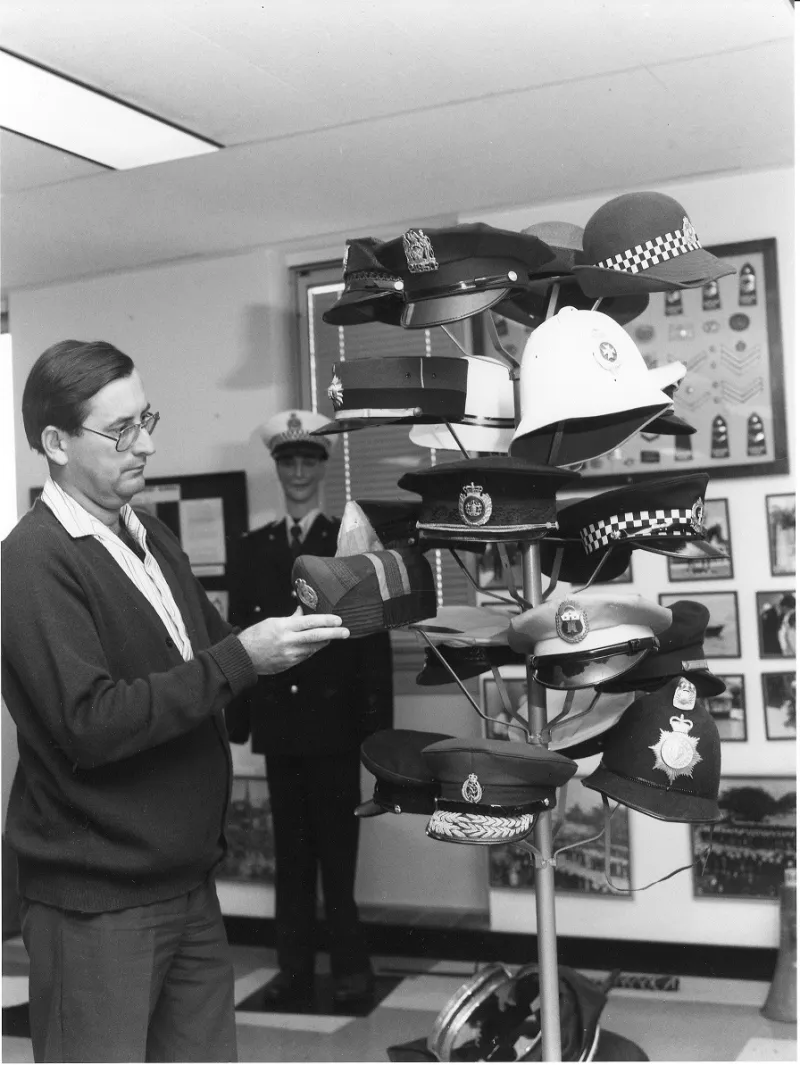
Photo: Queensland Police Service, CC BY 4.0, via Wikimedia Commons
In the spring of 2021, a mid-sized regional museum in the Midwest quietly consigned three nineteenth-century landscape paintings to a regional auction house. The works had sat in flat files for more than two decades, never exhibited, never loaned. In the catalog description, the institution noted they were 'duplicative of holdings already represented in the permanent collection.' The sale netted roughly $340,000. The funds were deposited into the museum's general operating budget.
No press release followed. No donor was formally notified. And within the professional community, the episode passed almost without comment — because, in truth, it happens all the time.
What 'Duplicate' Actually Means
Deaccessioning — the formal process by which a museum removes an object from its permanent collection — is governed in the United States by a patchwork of institutional policies, professional guidelines from the American Alliance of Museums (AAM), and, in some states, attorney general oversight. The AAM's standards are clear on one point: proceeds from deaccessioned works should be used exclusively for the acquisition of new objects, not for operating expenses or capital improvements. In practice, however, the definition of what qualifies as a legitimate deaccession — and how the resulting funds may be applied — is interpreted with considerable latitude.
The category of 'duplicates' occupies a particularly ambiguous corner of this landscape. Ask any curator and they will acknowledge that true duplicates — two identical prints pulled from the same plate, for instance — do exist and present a reasonable case for consolidation. But the term has a way of expanding under institutional pressure.
'I've seen the word duplicate applied to two works by different artists from the same decade, simply because both depicted rural American scenes,' said one collection curator at a major East Coast art museum, who requested anonymity to speak candidly. 'At that point, you're not talking about redundancy. You're talking about a decision that has already been made on financial grounds, and the language is being retrofitted afterward.'
The Institutional Survival Argument
Defenders of flexible deaccessioning practices are not without legitimate points. American museums — particularly those outside the well-endowed tier of institutions in New York, Chicago, and Los Angeles — have faced sustained financial pressure for years. Endowment returns have been uneven, government arts funding has contracted, and the post-pandemic recovery of earned revenue through admissions and programming has been uneven at best.
In this environment, a storage room full of unloved canvases can look, to a board of trustees, less like a cultural asset and more like an unrealized liability. The argument, as one director of a Southern regional museum framed it during a 2023 panel discussion, is essentially utilitarian: 'A painting that no one has seen in thirty years, and that we lack the resources to properly conserve, is not serving the public. If selling it funds three new acquisitions of underrepresented artists, or keeps our education department open for another year, that is a better outcome for our mission.'
It is a position that carries genuine weight. And yet it also contains the seeds of a rationalization that, taken to its logical conclusion, would allow institutions to treat their collections as liquidatable assets whenever budgets tighten.
Where the Money Actually Goes
The AAM's guidelines represent a professional standard, not a legal mandate in most jurisdictions. When Ask A Curator reviewed publicly available financial disclosures and 990 tax filings for a cross-section of American museums that have conducted notable deaccessions over the past decade, the picture that emerged was inconsistent.
Several institutions did apply proceeds directly to acquisitions — in some cases funding significant purchases of works by artists historically underrepresented in their collections. This is the model that professional organizations hold up as the ethical ideal, and it is genuinely practiced.
But in other cases, the paper trail grew murkier. Proceeds were deposited into acquisition funds that also absorbed general donations, making it difficult to trace how the money was ultimately deployed. In at least two instances, institutions later acknowledged — in response to donor inquiries — that funds from deaccessioned works had been used to offset conservation costs or facility expenses, a use that technically falls outside AAM guidelines.
'The lack of standardized disclosure requirements is the real problem,' said a collections ethics researcher affiliated with a Northeastern university, who has studied deaccessioning practices across more than sixty American institutions. 'Museums are not required to publicly disclose what they sold, for how much, or precisely where the money went. That opacity makes accountability almost impossible.'
The Donor Dimension
Perhaps the most fraught element of any deaccession involving a 'duplicate' designation is the question of donor intent. Many works in American museum collections arrived as gifts, often with explicit or implicit understandings about their permanent stewardship. When an institution sells a donated work — even one it has classified as redundant — it risks severing a relationship of trust that may extend across generations of a donor family.
One registrar at a West Coast museum described a situation in which a family that had gifted a collection of decorative arts in the 1970s discovered, through a chance encounter with an auction catalog, that several pieces had been deaccessioned years earlier. 'The relationship with that family was irreparably damaged,' she said. 'And beyond the institutional consequences, there was a genuine ethical failure. Those donors had every reasonable expectation that their gift would be honored.'
The AAM recommends proactive communication with donor families before any deaccession proceeds, but this guidance, too, is unevenly followed.
A Question of Who Decides
Underlying all of these debates is a more fundamental question: who has the authority — and the accountability — to determine that a work is genuinely surplus to a museum's mission?
In most American institutions, deaccession decisions are initiated by curatorial staff, reviewed by a collections committee, and approved by the board of trustees. The process is internal, and public input is rarely solicited. Critics argue that this structure insulates consequential decisions about publicly held cultural assets from the communities those institutions ostensibly serve.
'The collection belongs, in a meaningful sense, to the public,' said one veteran curator who has spent more than two decades working in American art museums. 'When we sell something and call it a duplicate, we are making a judgment on the public's behalf. That judgment deserves more scrutiny than it typically receives.'
Asking a curator, it turns out, is only the beginning of the conversation. The harder questions — about transparency, accountability, and what it means to hold art in trust for future generations — are ones that the field is still, haltingly, working to answer.