When Generosity Isn't Enough: The Quiet Art of Turning Down a Donation
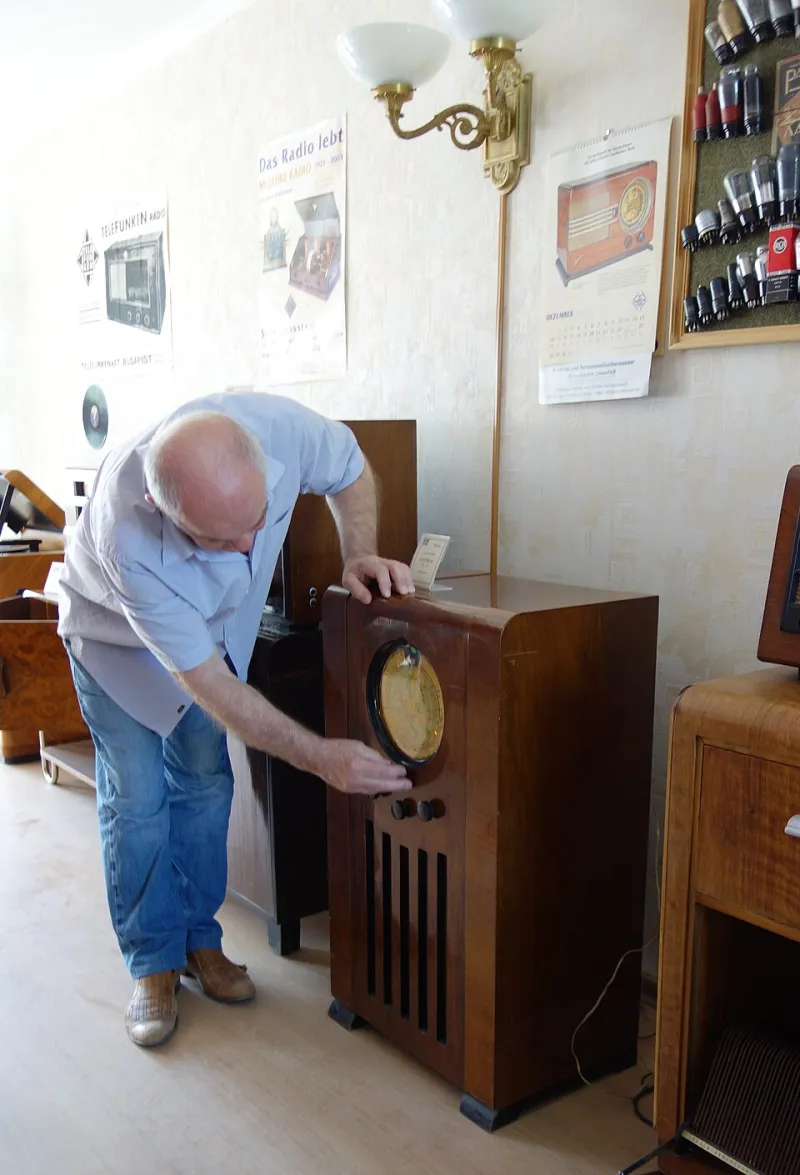
Photo: Serge Zykov, CC BY-SA 2.0, via Wikimedia Commons
Every year, thousands of Americans approach their local museums with an offer that feels, on the surface, impossible to refuse: a painting inherited from a grandmother, a sculpture purchased decades ago at an auction, a collection assembled with genuine passion and care. The gesture is almost always sincere. The answer, increasingly, is no.
This is not a story about ungrateful institutions. It is a story about the extraordinary complexity that lives inside a single word — acquisition — and why the curators and collection specialists who field these offers must weigh far more than sentiment when deciding what crosses the threshold of a permanent collection.
The Hidden Price Tag of a Free Gift
The most persistent misconception among well-meaning donors, according to acquisition specialists consulted by Ask A Curator, is the assumption that donating an artwork costs the museum nothing. In reality, accepting a work into a permanent collection initiates a financial commitment that can span generations.
"People hear the word 'donation' and they think the transaction is simple — they give, we receive," explains one senior curator at a mid-sized regional museum in the Mid-Atlantic. "What they don't see is that we're now responsible for that object's insurance, its conservation, its documentation, its storage climate, and potentially its eventual display. Over fifty years, a single modestly valued painting can cost an institution tens of thousands of dollars to maintain properly."
For larger institutions, those costs scale dramatically. The American Alliance of Museums has long noted that collection care represents one of the most significant — and least publicly visible — budget pressures facing U.S. museums today. When a museum accepts a work it cannot adequately support, it isn't simply acquiring art. It is acquiring liability.
The Collection Integrity Question
Beyond finances, curators describe a more nuanced challenge: maintaining the intellectual coherence of a collection. A permanent collection is not a warehouse. It is, ideally, a carefully argued statement about art history, culture, and human experience. Every addition either strengthens or dilutes that argument.
"We have donors who offer us genuinely beautiful objects," says one acquisitions committee chair at a Southeastern art museum. "But beautiful isn't the same as relevant. If we've spent thirty years building a collection that tells a specific story about American modernism, accepting a nineteenth-century European landscape — however lovely — introduces a narrative contradiction we'd then have to manage indefinitely."
This is where donor conversations become particularly sensitive. Collectors frequently attach deep personal meaning to the works they wish to give. Explaining that an object doesn't serve the collection's scholarly direction, without implying that the work itself lacks merit, requires a level of diplomatic precision that many curators describe as among the most demanding aspects of their professional lives.
Storage: The Crisis No One Photographs
If there is a single practical reality that shapes acquisition decisions more than any other right now, it is storage. America's museums are, in a word, full.
Studies have consistently found that the vast majority of objects held by U.S. museums are not on public display at any given time — estimates frequently suggest that figure hovers somewhere between 85 and 95 percent of total holdings. For many institutions, particularly those without recent capital investment in off-site storage facilities, the storage situation has reached a point of genuine crisis.
"We have works from the 1970s that have never been exhibited," admits one collections manager at a large Midwestern art museum, speaking on condition of anonymity. "When a donor calls, I'm thinking about the object they're offering, yes — but I'm also thinking about what we already have that we can't adequately care for. Accepting more without a plan isn't generosity to the collection. It's negligence."
Some institutions have responded by developing formal deaccession strategies to create space and resources for new acquisitions. Others have established stricter acceptance criteria, requiring that any proposed donation be accompanied by an endowment contribution to fund its ongoing care — a practice sometimes called a "maintenance gift" or "care fund." Both approaches have generated their own controversies, but both reflect the same underlying pressure.
The Ethical Dimension: Provenance and Due Diligence
In recent years, provenance research has added another layer of complexity to the donation review process. The increased scrutiny surrounding works that may have changed hands under duress during the Nazi era, or that may have been removed from their countries of origin without proper documentation, means that accepting a donation now often requires significant investigative work before any agreement can be reached.
"We've had situations where a donor came to us in complete good faith — they'd owned the work for decades, bought it legitimately from a reputable dealer — and our provenance research uncovered questions that neither of us anticipated," recounts one curator at a major East Coast institution. "Those situations are genuinely painful. The donor isn't at fault. But we can't accept a work with an unresolved ownership history. The reputational and legal risks are too significant."
The due diligence required to clear a work's history can take months or even years. During that period, donors are often left in an uncomfortable limbo, uncertain whether their offer will ultimately be accepted.
Navigating the Conversation
Perhaps the most underappreciated skill in a curator's professional toolkit is the ability to decline a donation with grace. Museums depend on donor relationships — not just for artwork, but for the financial support that keeps institutions operational. A poorly handled rejection can damage a relationship that took years to build.
Many institutions have developed formal processes to soften these moments. Some offer to assist donors in identifying other institutions that might be better suited to receive a particular work. Others provide written assessments that affirm the object's quality while clearly explaining why it falls outside the collection's current scope. A few have established formal "deferred consideration" categories, signaling genuine interest without making a binding commitment.
"We try to make the donor feel heard, because they deserve that," says one director of curatorial affairs. "They've cared for something. They want it to live on in a place that will honor it. Our job is to help them find that place — even if it turns out that place isn't us."
What Collectors Can Do
For collectors considering a donation, acquisition specialists offer consistent advice: research before reaching out. Understanding a museum's collection focus, reviewing its recent acquisitions, and reaching out to curatorial staff for an informal conversation before submitting a formal proposal can save significant time and emotional investment on both sides.
Transparency about a work's condition, exhibition history, and provenance documentation also substantially improves the likelihood of a productive conversation — and the speed with which an institution can make a decision.
The goal, ultimately, is the same for both parties: to place exceptional objects in contexts where they will be preserved, studied, and experienced by future generations. Sometimes that means a museum must say no. And sometimes, that no is the most honest form of respect a curator can offer.