What Curators Don't Say: The Strategic Language of Difficult History in American Museums
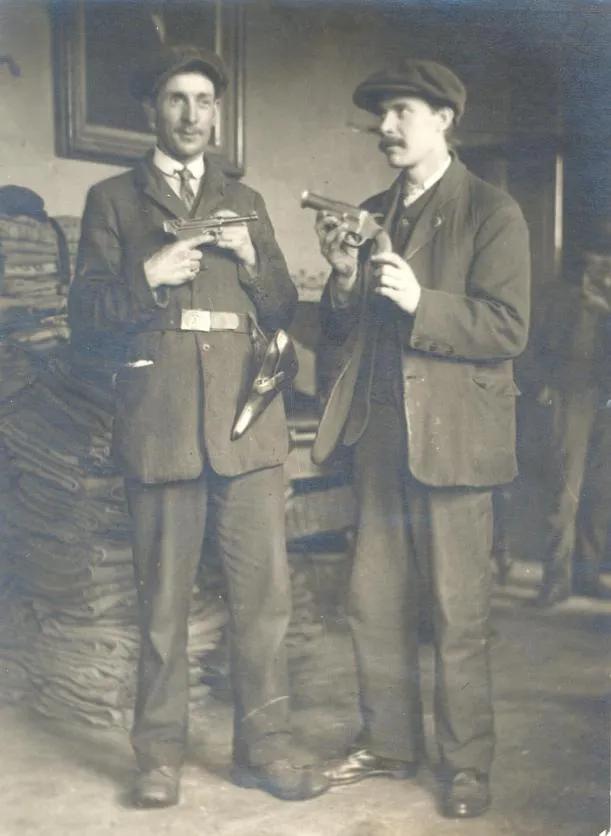
Photo: TWAM - Tyne & Wear Archives & Museums, No restrictions, via Wikimedia Commons
When you pause before an exhibition label in a history or art museum, you are reading the product of weeks — sometimes months — of institutional negotiation. The sentence you absorb in thirty seconds may have been revised a dozen times, debated in committee, reviewed by legal counsel, and stress-tested against donor sensitivities. That is not cynicism. It is simply the reality of how American museums communicate the most uncomfortable chapters of human experience to a broad and often divided public.
Curators who work with histories of enslavement, colonial violence, or genocide occupy a professional space that is equal parts scholarship and diplomacy. The language they choose — and the language they deliberately withhold — constitutes what many in the field quietly describe as a second curatorial practice, one that runs parallel to the intellectual work of assembling objects and research.
The Weight of a Single Word
Consider the difference between labeling an object as acquired versus seized, or describing a period as colonial expansion rather than occupation. To a casual reader, the distinction may seem minor. To a curator, it is seismic.
"Every noun and every verb carries ideological freight," explains one senior curator at a major Northeastern institution who asked not to be named because of ongoing exhibition negotiations. "When we write that a ceremonial object was 'collected' during an expedition, we are making a claim about agency and legitimacy that may be entirely false. But 'looted' triggers board conversations we may not be ready to have."
This tension — between historical accuracy and institutional readiness — sits at the heart of how difficult narratives are framed in galleries across the United States. Curators are not, by and large, attempting to deceive visitors. Most are working sincerely toward greater transparency. But they operate within structures that impose constraints, and the vocabulary they deploy reflects those constraints as much as it reflects the historical record.
Passive Voice as a Shield
One of the most consistent linguistic strategies curators employ when presenting uncomfortable histories is the passive construction. "Enslaved people were forced to labor" rather than "Plantation owners forced enslaved people to labor." "Artifacts were removed" rather than "Colonial administrators confiscated artifacts."
The passive voice diffuses moral accountability. It describes consequences without assigning cause. Curators who use it are not always doing so cynically — sometimes the historical record genuinely does not allow for named perpetrators — but the cumulative effect across an exhibition can be to soften a narrative that deserves sharper edges.
At the same time, a growing number of institutions are making deliberate moves in the opposite direction. Several museums have begun replacing passive constructions with active, agent-centered language, naming perpetrators where the record permits and using terms like enslaver rather than slave owner — a shift that reframes moral responsibility rather than distributing it vaguely across history.
"The word 'enslaver' does something that 'slave owner' does not," says a curator at a Southern history museum who has spent years developing interpretive frameworks for plantation-era collections. "It locates the violence in a person's actions rather than in a person's property rights. That is not a small distinction."
Spatial Rhetoric: Where Objects Live in a Room
Language is only one dimension of curatorial framing. The physical arrangement of objects within a gallery constitutes its own form of argument — one that operates below the threshold of conscious reading but shapes visitor interpretation profoundly.
Where a museum places an object relative to other objects, how much light it receives, whether it occupies a central vitrine or a peripheral shelf, whether it is accompanied by contextual material or presented in isolation — all of these decisions communicate meaning. A set of shackles displayed alongside a plantation owner's ledger tells a different story than the same shackles displayed alongside photographs of the people who wore them.
"Proximity implies relationship," notes a curator who has designed several exhibitions on the history of the transatlantic slave trade. "If I place an object associated with violence next to an object associated with wealth and call that 'context,' I am making an argument about how those two things relate. If I instead surround that object with evidence of the humanity, resistance, and cultural continuity of the people who were harmed, I am making a very different argument."
Museums have historically defaulted to arrangements that center the perspectives of collectors, donors, and the dominant culture — often because collections were built by those groups. Reinterpreting existing collections without acquiring new objects requires curators to work with the spatial and material vocabulary they have, which can mean strategic borrowing, temporary loans, and the deliberate introduction of community-sourced materials to counterbalance a collection's inherited biases.
The Omission Problem
Perhaps the most consequential curatorial decision is not what to include, but what to leave out. Museums cannot exhibit everything. Selection is inherent to the practice. But in exhibitions dealing with difficult histories, omission carries particular moral weight.
An exhibition on westward expansion that presents Indigenous displacement as an unfortunate byproduct rather than a central feature is making an argument through absence. A collection of African art displayed for its aesthetic properties, without reference to the conditions under which it was acquired, is telling an incomplete story. The incompleteness is itself a statement.
Curators are increasingly aware of this dynamic, and many are developing what some describe as an "omission audit" practice — a systematic review of what a proposed exhibition does not address, and whether those gaps serve legitimate interpretive purposes or simply protect the institution from discomfort.
"You have to ask yourself: who benefits from not knowing this?" says one curator who recently oversaw a major reinstallation of a permanent collection at a Midwestern art museum. "If the answer is that the institution benefits, or the donor's legacy benefits, that is a signal that you have interpretive work to do."
The Visitor in the Middle
Curators are quick to point out that these decisions are not made in a vacuum of institutional self-interest. Visitor experience genuinely shapes how difficult material is presented. Research consistently shows that visitors who feel attacked or implicated by exhibition content disengage — and a visitor who disengages learns nothing. The goal of education requires that people remain in the room, metaphorically and literally.
This is the genuine tension that curators navigate: how to present historical violence with the clarity and moral weight it deserves while keeping visitors emotionally present enough to receive the information. It is not a tension that resolves neatly, and curators who claim to have solved it are probably not being fully honest.
What the best practitioners in the field have developed is a practice of graduated disclosure — introducing difficult material in ways that build context before confronting visitors with its full implications. It is a technique borrowed, in part, from trauma-informed education, and it reflects a growing sophistication in how museums think about their audiences.
Reading the Room — and the Label
For visitors who want to engage more critically with museum exhibitions, curators offer a consistent piece of advice: pay attention to the verbs. Notice when language assigns agency and when it diffuses it. Ask what the exhibition does not show you, and why. Consider whose perspective is centered and whose is peripheral.
The labels on museum walls are not neutral transmissions of historical fact. They are arguments, shaped by scholarship, institutional politics, community relationships, and the ongoing negotiation between what happened and what an institution is prepared to say about it. Understanding that does not diminish the experience of visiting a museum. It deepens it — transforming a passive encounter with objects into an active conversation about how history gets told, and by whom.