The Art of the Deal: Inside the High-Stakes World of Museum Exhibition Loans
Photo: Serge Zykov, CC BY-SA 2.0, via Wikimedia Commons
The press release lands with the kind of breathless language that has become standard in American museum communications: a "once-in-a-generation" gathering of masterworks, an "unprecedented" assembly of loans from collections across three continents, a "transformative" opportunity for regional audiences. What the press release does not mention is the eighteen months of transatlantic phone calls, the reciprocal loan commitments quietly exchanged, the insurance riders that required board approval, or the single collector whose refusal nearly collapsed the entire project two weeks before the catalog went to press.
The traveling exhibition is one of the defining features of contemporary American museum culture. It drives attendance, generates revenue, attracts press coverage, and positions institutions within a competitive national landscape. It is also, according to the curators and directors who spoke with Ask A Curator for this article, one of the most politically intricate undertakings in the profession — a negotiation that unfolds according to unwritten rules that the public rarely glimpses.
The Currency of Reciprocity
At the heart of the international loan system lies a principle that every curator understands implicitly: goodwill is the primary currency. Institutions that lend generously tend to borrow successfully. Those with reputations for demanding onerous conditions, delaying decisions, or failing to honor informal commitments find themselves quietly deprioritized when the next major exhibition is being assembled.
"There is no formal exchange rate," explained one senior curator at a large American art museum, speaking on background. "But everyone in the field knows roughly what they owe and what they are owed. If you borrow a significant work from a European institution, you understand that you will be expected to reciprocate at some point. That expectation shapes your collection strategy in ways that are not always visible from the outside."
This informal economy functions reasonably well when institutions share comparable collections and roughly equivalent leverage. It becomes considerably more complicated when a smaller American museum — one without a deep inventory of internationally desirable works — seeks to borrow from a major European collection. In those cases, cash often substitutes for reciprocal loans, in the form of exhibition fees, catalog contributions, or outright touring payments that can run into the hundreds of thousands of dollars.
The Marquee Piece Problem
Every traveling exhibition has what curators privately call a "marquee piece" — the single work whose presence justifies the exhibition's marketing claims and, in many cases, its financial viability. Securing that piece is frequently the most difficult part of the entire project, and the lengths to which institutions will go to obtain it can strain professional relationships and, occasionally, institutional ethics.
One curator described an experience in which the organizing institution for a major survey exhibition effectively held a marquee loan hostage, conditioning its release on the borrowing museum's agreement to purchase advertising in the exhibition catalog and host a private event for the organizing institution's major donors. "It was presented as a partnership opportunity," the curator said carefully. "But everyone at the table understood what was actually being asked."
These arrangements occupy a gray area that the profession has never fully resolved. Exhibition fees and catalog partnerships are standard practice. The line between legitimate cost-sharing and institutional coercion is not always easy to locate, and the power differential between large organizing institutions and smaller borrowing museums makes frank negotiation difficult.
When Mission and Marketing Diverge
Perhaps the most consequential tension in the exhibition loan economy is the one between curatorial vision and institutional revenue pressure. American museums operate in a financial environment that has grown increasingly challenging over the past two decades, with declining public funding, rising operational costs, and heightened competition for philanthropic dollars. Blockbuster exhibitions are one of the few reliable tools available to development offices trying to justify major gift solicitations.
The result, several curators acknowledged, is that exhibition programming is sometimes shaped less by scholarly urgency than by anticipated attendance figures and sponsorship potential. A rigorous survey of an underrepresented regional tradition may be intellectually defensible and professionally admirable. It is unlikely to generate the earned media coverage that keeps a board of trustees satisfied.
"I have had conversations with directors who were genuinely enthusiastic about a curatorial proposal right up until the development office ran the numbers," said one curator who has worked at multiple American institutions. "Then suddenly the conversation shifts. You start hearing about 'audience readiness' and 'donor alignment.' Those are polite ways of saying the exhibition is not commercially viable."
This pressure does not always produce bad outcomes. Exhibitions organized with broad appeal in mind can introduce significant artists to audiences who might never have encountered them otherwise. But it does mean that the publicly stated rationale for an exhibition — scholarly importance, historical timeliness, cultural relevance — is not always the primary factor driving the decision to mount it.
The Condition Report as Negotiating Tool
One aspect of the loan process that receives almost no public attention is the role of conservation condition reports in shaping exhibition outcomes. Before any significant loan is approved, the lending institution's conservators assess the work's physical stability and specify the environmental conditions — temperature, humidity, light levels, vibration limits — under which it may travel.
These requirements are legitimate and important. They are also, several curators noted, occasionally deployed strategically. A lending institution that has grown ambivalent about a loan commitment can effectively withdraw the work by issuing a condition report with requirements that no reasonable borrowing institution can meet. Conversely, an institution eager to place a work on tour — for reasons of visibility, reciprocal benefit, or simply reduced storage costs — may find its conservators arriving at more permissive conclusions than a strictly objective assessment might warrant.
"I am not saying condition reports are fabricated," one curator said. "I am saying they involve professional judgment, and professional judgment is not made in a vacuum. Institutional context matters."
What Visitors Deserve to Know
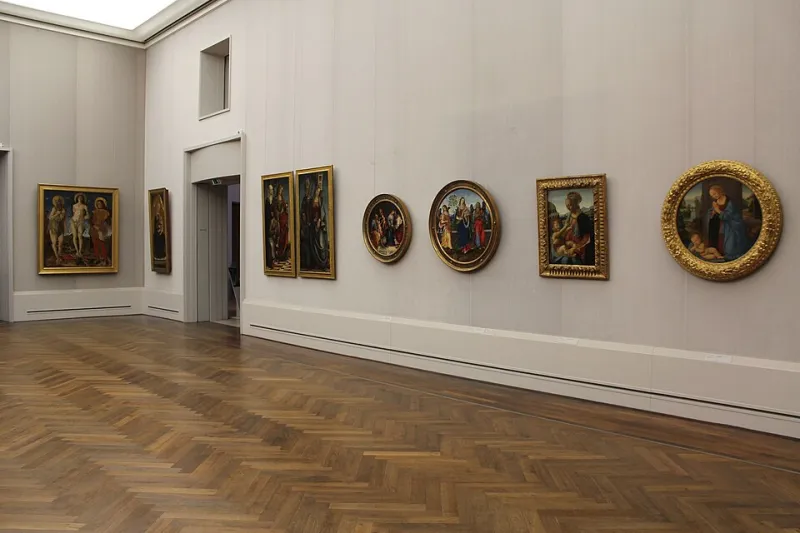
The American museum-going public tends to encounter traveling exhibitions as finished products — coherent, authoritative, apparently inevitable. The interpretive labels explain what the curators want visitors to understand. They do not explain why this particular group of works was assembled, which loans were refused, what financial arrangements underpin the installation, or how the exhibition's narrative might have looked different had different works been available.
Some curators argue that this gap between presentation and process is simply the nature of professional communication — that visitors come to experience art, not institutional politics. Others are less comfortable with the asymmetry.
"The works on those walls are the result of decisions made by people with interests, constraints, and blind spots," said one curator. "Presenting the exhibition as if it were a purely scholarly exercise is its own form of distortion. Our audiences are sophisticated enough to handle a more honest account of how this work gets done."
That more honest account is, at present, rarely offered. Whether it should be is a question the profession has not yet fully confronted — and one that Ask A Curator will continue to explore.