Giving It Back: The Moral Weight Curators Carry When Artifacts Go Home
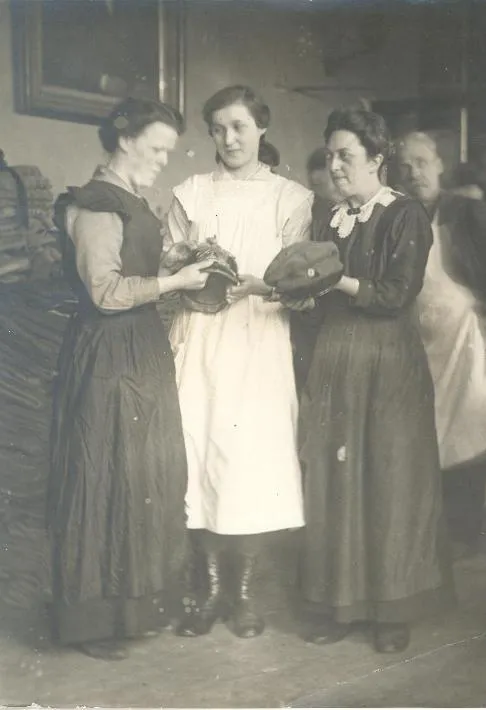
Photo: TWAM - Tyne & Wear Archives & Museums, No restrictions, via Wikimedia Commons
When a museum returns a looted artifact to its country of origin, the public sees a press conference and a handshake. What they rarely see is the curator who spent years wrestling with the decision. We spoke with cultural stewards across the United States about the profound — and often unspoken — reckoning that repatriation demands.
There is a particular silence that settles over a gallery when a major object is removed from its case. Staff members who have walked past it for decades pause at the empty pedestal. A label gets taken down. A photograph is pinned in its place, almost apologetically. And somewhere down the hall, a curator sits with the knowledge that they helped make it happen — and that the institution they serve will never quite look the same.
Repatriation, the formal return of culturally significant objects to their nations or communities of origin, has moved from the margins of museum policy to its very center over the past decade. High-profile cases — the Getty's return of looted antiquities to Italy and Greece, the Smithsonian's repatriation of Native American remains under the Native American Graves Protection and Repatriation Act (NAGPRA), the ongoing debates over the Benin Bronzes — have placed American institutions under a scrutiny that shows no sign of abating. But the loudest voices in these conversations are rarely the ones who know the objects most intimately.
The Curator's Paradox
For many curators, repatriation is not a policy question. It is a personal one.
"I had studied this object for fifteen years," one curator at a major Midwestern encyclopedic museum told us, speaking on the condition of anonymity because the repatriation process at their institution is still ongoing. "I wrote my dissertation around it. And when the conversation about its provenance became impossible to ignore, I was the one who had to go back through every acquisition record and acknowledge what I already suspected — that it had been taken under circumstances no ethical framework could justify."
That kind of self-examination is more common than institutional communications departments tend to let on. Curators are trained to be advocates for the objects in their care. They build careers around specific collections, cultivate donor relationships, and design exhibitions that argue, implicitly and explicitly, for the importance of those holdings to the public good. To then participate in the process of returning an object is to hold two competing professional obligations simultaneously: loyalty to the institution and accountability to history.
"I don't think those two things are as incompatible as people assume," said another curator, this one specializing in pre-Columbian art at a large East Coast research museum. "But I'd be lying if I said there wasn't grief involved. Real grief. Not because I think the object should stay — I don't, in many cases — but because you're acknowledging that something went wrong at the very foundation of how it came to be here."
What the Records Actually Show
Provenance research — the painstaking work of tracing an object's ownership history — sits at the heart of every repatriation conversation. It is also, curators will tell you, frequently inconclusive.
Gaps in documentation are not always evidence of wrongdoing, but they are never reassuring. Objects that passed through the European art market in the mid-twentieth century carry particular uncertainty, as do those acquired during the colonial period, when the legal and ethical frameworks governing cultural property were radically different from those applied today. American museums built their encyclopedic collections largely during this era, which means the provenance questions now confronting institutions are not isolated incidents — they are systemic.
"Every time we open a file on a major acquisition from that period, we're essentially auditing the ethics of a previous generation," said a curator at a West Coast natural history museum who has been involved in NAGPRA compliance work for over a decade. "And those curators weren't necessarily acting in bad faith by the standards of their time. That doesn't make the outcome acceptable. But it does make the work more complicated than a simple narrative of villains and victims."
This nuance rarely survives the journey into public discourse. Repatriation cases tend to generate headlines that cast institutions as either enlightened reformers or reluctant participants forced into accountability. The lived experience of the curators navigating these processes is considerably less tidy.
Between the Institution and the Claimant
One dimension of repatriation that receives little public attention is the relationship that often develops between curators and the communities or nations seeking the return of their heritage.
For some curators, these exchanges become among the most meaningful professional relationships of their careers. Source communities bring knowledge about objects that no amount of archival research can replicate — information about ritual context, material meaning, and cultural significance that transforms how a curator understands something they thought they knew well.
"I had a conversation with an elder from the community that had filed the claim," recalled one curator who works with Indigenous collections at a federally funded institution. "She described how the object had been used, what it meant to the people who made it, why its absence had been felt across generations. I realized that everything I had written about it in our catalog was technically accurate and completely insufficient at the same time."
Those encounters do not always proceed so gracefully. Negotiations can be protracted, contentious, and legally complex. Curators sometimes find themselves caught between institutional legal counsel urging caution and their own professional judgment that a claim is legitimate. The power dynamics are rarely comfortable, particularly when the claimant is a community with far fewer institutional resources than the museum holding their heritage.
What "Stewardship" Actually Means Now
The word most commonly used to describe a curator's relationship to the objects in their care is stewardship — a term that implies temporary custody rather than permanent ownership. In practice, however, many institutions have operated for generations as though acquisition were the same as possession in perpetuity.
Repatriation is forcing a reckoning with that assumption. And for many curators, the process — however painful — is clarifying something important about what their profession is actually for.
"We talk a lot about access," said one curator who has participated in multiple international repatriation agreements. "About making art and culture available to the broadest possible public. But whose access? And at whose expense? Those questions used to feel abstract. They don't anymore."
This is not a comfortable place for a profession that has long grounded its public value in the universality of its collections. The encyclopedic museum — the institution that aspires to tell the story of all human cultures under one roof — is, in some ways, the institution most challenged by the repatriation movement. And yet curators at those very institutions are often among the most thoughtful voices in the conversation.
"I believe in this museum," said one such curator, quietly. "I believe in what it can do for people who walk through those doors. And I also believe that some of what's in this building shouldn't be here. Holding both of those things is the work now. It's not going to get easier. But I think it's the right work."
Ask A Curator connects art enthusiasts with the museum professionals shaping how America understands its collections. Have a question for a curator? Submit it through our homepage.