Stolen Light: How Curators Reckon With Art That Carries a Criminal Past
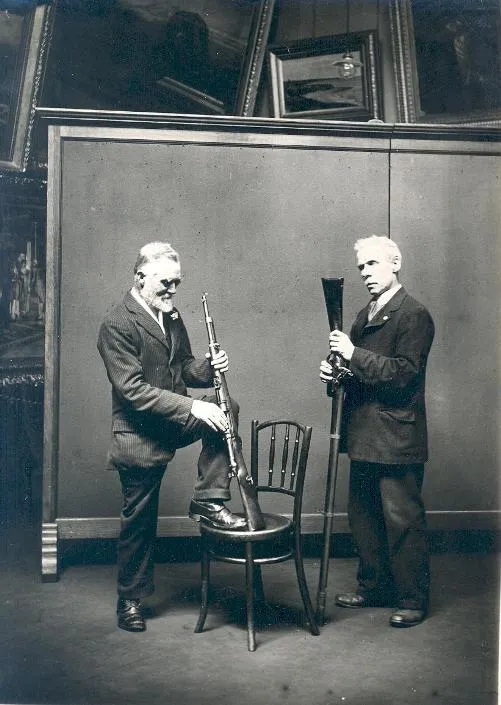
Photo: TWAM - Tyne & Wear Archives & Museums, No restrictions, via Wikimedia Commons
There is a particular kind of dread that settles over a curatorial department when provenance research turns up the wrong name in the wrong decade. The painting on the wall has not changed. The light still falls across it the same way it did yesterday. But the curator standing before it now carries knowledge that transforms the gallery into something closer to a crime scene.
This is not a hypothetical scenario. It is, according to curators who spoke candidly with Ask A Curator, an increasingly routine feature of contemporary museum life in the United States.
The Paper Trail That Doesn't Lie—and the One That Does
Provenance, the documented chain of ownership for a work of art, is the backbone of any acquisition. American museums rely on it to establish legitimacy, satisfy legal requirements, and assure donors and the public that their collections are ethically sound. But provenance documents are only as reliable as the people who created them, and history has demonstrated repeatedly that those people were not always honest.
The most well-documented category of criminally entangled art involves looting during the Nazi era. The 1998 Washington Principles on Nazi-Confiscated Art committed signatory institutions—including many of the largest American museums—to identifying and, where appropriate, returning works seized from Jewish collectors and families between 1933 and 1945. More than two decades later, that work remains unfinished. Scholars estimate that hundreds of thousands of objects were displaced during this period, and a meaningful proportion of them eventually entered the legitimate market through intermediaries who obscured their origins.
But the Nazi era is only one chapter. Curators are also grappling with objects that passed through the hands of antiquities smugglers in the latter half of the twentieth century, with artifacts extracted illegally from archaeological sites across Italy, Greece, Cambodia, and sub-Saharan Africa, and with works whose chain of custody simply dissolves at a suspicious moment—a gap in the record that no archive can fill.
"The absence of documentation is itself a kind of evidence," one senior curator at a major East Coast institution told Ask A Curator, speaking on condition of anonymity. "When you can't account for where something was between 1938 and 1955, or between 1970 and 1985, you have to ask yourself what that silence means."
Acquired in Good Faith—But Now What?
The legal framework governing these situations is considerably more forgiving to institutions than the moral one. American museums that acquired works decades ago, before stricter due-diligence standards were established, often have defensible legal title to objects that scholars now regard as almost certainly looted. The question is what to do with that defensible title once the darker history becomes apparent.
The options are neither simple nor comfortable. A curator may choose to commission additional research, hoping that more thorough investigation will either confirm the work's legitimacy or clarify the nature of any wrongdoing. They may quietly contact the government or family believed to have a claim, opening a negotiation that could take years and may never reach resolution. They may continue to display the work while adding interpretive material that acknowledges the contested history. Or they may remove it from view while the institution deliberates—a decision that itself carries public relations implications.
Each path has institutional costs. Research takes time and money. Negotiation requires legal counsel. Transparent labeling invites scrutiny. Removal raises questions from donors, board members, and journalists. "There is no neutral choice," as one provenance researcher affiliated with a Midwestern university museum put it. "Every decision communicates something about what the institution values."
The Investigator in the Gallery
What has changed most dramatically in the past decade is the sophistication of the tools available to those asking difficult questions. The Art Loss Register, maintained in London, contains records of more than 700,000 stolen or looted works. The German Lost Art Foundation has digitized thousands of pre-war collection records. Italian investigators, building on high-profile cases involving major American institutions in the 1990s and 2000s, have developed detailed databases of objects suspected to have passed through illegal channels.
Curators who once relied on dealer assurances and auction house documentation now have access to comparative image databases, digitized archives from liberated Nazi headquarters, and genealogical records that can trace family ownership across generations. The result is that works which appeared unimpeachable at acquisition are sometimes revealed, years later, to have been hiding in plain sight.
The Getty Museum's settlement with Italy in 2007, in which the institution returned forty objects including the celebrated Aphrodite of Knidos, became a landmark moment for American institutions. It signaled that legal title and moral title were not the same thing, and that courts of public opinion—and foreign governments—would increasingly hold museums accountable to the latter standard.
Displaying the Uncomfortable Object
When a work remains on view while its history is under investigation, curators face a secondary challenge: how to communicate complexity without either alarming visitors or appearing to minimize legitimate concerns. Wall text, already a constrained medium, becomes even more fraught when the subject is potential criminality.
Some institutions have adopted the practice of flagging contested provenance directly on gallery labels, using measured language that acknowledges gaps without rendering verdicts. Others prefer to address the issue through exhibition catalogues, public programs, or dedicated provenance pages on their websites—venues that allow for greater nuance than a three-hundred-word panel.
"We have an obligation to the public, but we also have an obligation not to prejudge," explained a curator who has worked on repatriation claims at multiple institutions. "The research has to lead the communication. If you get ahead of it, you cause harm in multiple directions."
That harm can flow toward claimants whose cases are inadvertently weakened by premature institutional statements, toward living artists or their estates whose reputations become entangled in historical wrongdoing they did not commit, and toward the institutions themselves, whose credibility depends on being seen as deliberate rather than reactive.
A Reckoning That Is Still Unfolding
American museums are not monolithic in how they approach these questions. Larger institutions with dedicated provenance research departments and legal teams operate very differently from smaller regional museums that may lack both the resources and the expertise to conduct thorough investigations independently. The Association of Art Museum Directors has issued guidelines, but guidelines are not mandates, and compliance varies considerably.
What is clear, from conversations with curators across the country, is that the era of comfortable ignorance is over. The digitization of archives, the activism of source communities and diaspora organizations, and the growing visibility of repatriation debates in mainstream media have created an environment in which institutions can no longer credibly claim that the past is simply past.
For the curators standing in those galleries, the work of reckoning is daily and ongoing. The painting still hangs on the wall. The light still falls the same way. But the questions it carries now travel with every visitor who stands before it—whether the label acknowledges them or not.