When the Name on the Wall Is Wrong: How Curators Navigate the Crisis of Misattribution
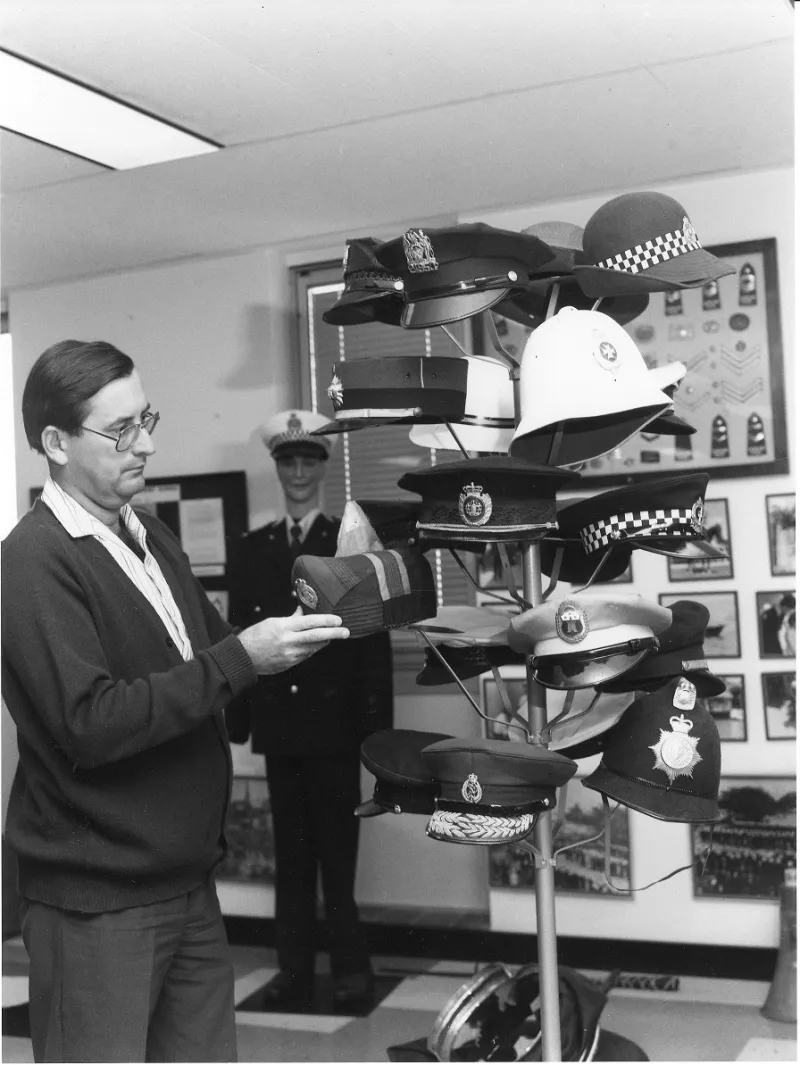
Photo: Queensland Police Service, CC BY 4.0, via Wikimedia Commons
There is a particular kind of dread familiar to curators that rarely surfaces in public conversation. It is not the anxiety of a damaged canvas or a failed loan negotiation. It is something quieter and more destabilizing: the growing suspicion that the name on the label—the name that has appeared in catalogs, auction records, and school textbooks for generations—may belong to the wrong person entirely.
Attribution crises are among the most professionally and emotionally complex challenges in the museum world. They are also far more common than most visitors realize.
The Moment of Doubt
For many curators, the process begins not with a dramatic revelation but with a nagging inconsistency. A brushstroke that doesn't quite align with established technique. A pigment analysis that returns an unexpected date range. A letter surfaced from a private archive that reframes a provenance narrative built over decades.
"It rarely arrives as a single lightning bolt," says one curator at a major Northeastern art museum, speaking on background to discuss an ongoing reattribution process. "It accumulates. You start with a question, and the question opens onto more questions, and eventually you're looking at something that you can no longer honestly call what you've been calling it."
That accumulation of doubt carries genuine weight. The work in question may be a cornerstone of the collection—featured in the institution's fundraising materials, reproduced on the museum shop's best-selling postcard, cited in hundreds of scholarly papers under the name now in dispute. The stakes extend well beyond a simple label change.
What Technology Is Revealing
Advances in imaging and materials analysis have accelerated the pace of reattribution significantly over the past two decades. Techniques such as infrared reflectography, X-ray fluorescence mapping, and multispectral imaging can now reveal underdrawings, compositional revisions, and pigment profiles invisible to the naked eye. When these findings diverge from what period documentation suggests, curators face a methodological reckoning.
The situation grows more complex when findings implicate not just authorship but workshop practice. Renaissance and Baroque studios, for instance, operated on collaborative models that confound the modern expectation of singular artistic genius. A painting long attributed to a master may prove, under technical scrutiny, to be the work of a gifted assistant—or a hybrid effort in which the celebrated hand touched only a fraction of the surface.
"The public tends to think of attribution as binary," explains a curator specializing in Old Masters at a Midwestern encyclopedic museum. "Either someone painted it or they didn't. But the historical reality is far messier. You can have a work that is genuinely 'of the workshop' and still be an exceptional object. The difficulty is that the market, and sometimes the public, struggles to hold that complexity."
The Institutional Ripple Effect
When a reattribution moves from internal discussion to public announcement, the institutional consequences can be significant. Donors who gave works under one attribution may feel—rightly or wrongly—that the museum's stewardship failed them. Lenders who included a piece in traveling exhibitions under a celebrated name may raise concerns. Insurance valuations shift. And the gallery itself must be reconsidered: if the crown jewel is no longer what it was thought to be, how does that alter the interpretive logic of the surrounding space?
Some institutions manage these transitions with careful, staged communication. Others have found themselves blindsided by press coverage before internal processes were complete—a scenario that several curators describe as among the most difficult professional experiences of their careers.
"You want to be transparent," says one curator who oversaw a high-profile reattribution at a prominent East Coast museum several years ago. "But transparency has to be timed responsibly. If you announce uncertainty before the research is complete, you create confusion without resolution. If you wait too long, you look like you were hiding something. There is no perfect moment."
The Human Cost of Getting It Right
Beyond the institutional mechanics lies something more personal: the curator's relationship with the work itself. Many professionals in this field have spent years—sometimes entire careers—developing interpretations of objects they believed they understood. To revise that understanding is an act of intellectual honesty that nonetheless carries a private grief.
"I had written about that painting extensively," reflects one scholar-curator, describing a work whose attribution was significantly downgraded following a technical study. "I had stood in front of it with graduate students and talked about what made it extraordinary. And it is still extraordinary. But I had to sit with the fact that some of what I said was built on an assumption that turned out to be wrong. That's humbling in a way that doesn't fully go away."
This emotional dimension is rarely acknowledged in the formal language of scholarly revision. Catalog entries are updated. Databases are amended. Press releases are carefully worded. But the human experience of navigating institutional and personal uncertainty seldom enters the record.
Communicating Uncertainty to the Public
One of the most persistent challenges curators face in attribution crises is translating scholarly nuance for general audiences. Museum visitors are accustomed to the authority implicit in a wall label. The addition of phrases like "attributed to," "workshop of," or "formerly known as" may seem minor in academic contexts but can generate substantial confusion—and occasionally outrage—among the public.
"People feel misled, even when no one intended to mislead them," notes one education curator who has worked on visitor communication strategies around reattribution. "The honest answer is that knowledge evolves, and museums are obligated to reflect that evolution. But 'we were wrong and here's why' is not a message that institutions find easy to deliver, and it's not always a message that visitors find easy to receive."
Some museums have begun approaching these moments as opportunities for public engagement rather than crises to be managed. Interactive displays, curator-led conversations, and behind-the-scenes content—precisely the kind of material that platforms like Ask A Curator were built to amplify—can transform an attribution revision into a compelling demonstration of how scholarship actually works.
The Question That Remains
Ultimately, the curator's dilemma in these situations is not merely about names and labels. It is about the relationship between institutions and the truth they are charged to uphold. When new evidence demands revision, the professional obligation is clear, even when the path is difficult.
"The work doesn't become less interesting when the attribution changes," says one curator, returning to a theme that surfaced in nearly every conversation for this piece. "In many ways, it becomes more interesting. The question of who made something, and how we know, and what it means when we're uncertain—that's not a problem to be solved and set aside. That's the heart of what we do."
For visitors standing before a painting whose label now reads differently than it did on their last visit, that may be the most honest and generous invitation a museum can extend: not the false confidence of settled knowledge, but the genuine intellectual adventure of a question still worth asking.