When the Meme Becomes the Message: How Curators Fight to Reclaim the Stories Behind Viral Masterpieces
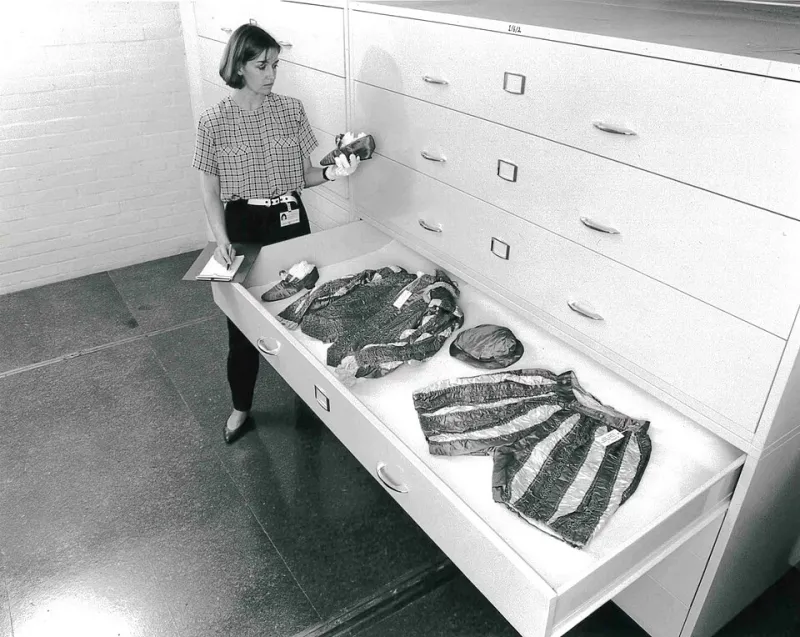
Photo: powerhouse museum archive, CC BY 4.0, via Wikimedia Commons
There is a particular kind of institutional vertigo that sets in when a curator opens their phone and finds that a painting they have spent years contextualizing — researching its provenance, its historical moment, its relationship to the artist's broader body of work — has become the background image for a joke about Mondays.
This is not a hypothetical. It is, increasingly, a professional reality.
For museums across the United States, the viral ascent of certain artworks has created a dilemma with no clean resolution: how do you celebrate the cultural reach of a work you steward while simultaneously preserving the scholarly depth that makes it worth celebrating in the first place?
The Moment the Narrative Escapes
Curators will tell you, often with a mixture of pride and resignation, that there is a precise moment when an artwork stops belonging to the institution and starts belonging to the internet. It rarely announces itself. A celebrity posts a selfie in front of a canvas. A late-night host uses a Renaissance portrait as a punchline. A TikTok sound gets paired with a detail from a Flemish interior, and within seventy-two hours, the clip has been viewed forty million times.
"The work itself doesn't change," one senior curator at a major Midwestern art museum explained during a recent conversation with Ask A Curator. "But the context it travels in — that changes completely. And we have very little power over it once it leaves these walls, even digitally."
The challenge is compounded by the nature of how meaning travels online. A meme operates through compression: it strips away nuance, flattens complexity, and thrives on instant recognition. These are precisely the qualities that make memes effective communication tools and precisely the qualities that make them antithetical to serious curatorial work.
Famous Enough to Be Misunderstood
Consider the peculiar fate of works that have achieved what might be called hyper-visibility. Johannes Vermeer's Girl with a Pearl Earring, housed at the Mauritshuis in The Hague but endlessly reproduced in American pop culture, has been recast as everything from a fashion icon to a symbol of feminine mystery to the subject of countless Halloween costumes. The painting's actual historical context — its uncertain subject, its relationship to Vermeer's technique, its place within seventeenth-century Dutch domestic portraiture — rarely survives the journey.
American institutions face this dynamic with their own iconic holdings. When a work achieves saturation-level cultural presence, museum educators frequently report that visitors arrive with preformed associations that are difficult to displace. The curatorial narrative, however meticulously assembled, must compete with years of accumulated pop culture shorthand.
"We've had visitors stand in front of significant works and immediately start recreating a meme pose," noted one gallery educator at a prominent East Coast institution. "That's not inherently bad — engagement is engagement — but it does mean the interpretive work we've done has to work twice as hard to break through."
The Institutional Response: Adaptation or Resistance?
Museums have not been passive in the face of this challenge, though their responses vary considerably in philosophy and execution.
Some institutions have chosen a form of strategic co-optation: leaning into the virality and using it as a gateway. The logic is straightforward — if a meme brings a visitor through the door, the museum has an opportunity to offer something the internet cannot. Depth. Proximity. Silence. The experience of standing before the actual object.
Others have invested heavily in what might be called counter-programming: developing digital content that actively engages with viral interpretations while redirecting audiences toward more substantive readings. Short-form videos produced by curatorial staff, interactive web features, and social media series that acknowledge the meme while layering in historical context have become increasingly common tools in the institutional arsenal.
But there is a third camp — smaller, quieter, and perhaps more philosophically honest — that questions whether any institutional response can meaningfully recapture a narrative once it has gone viral. "At a certain level of cultural saturation, you're not really competing," one curator admitted. "You're annotating. And there's a real question about whether that annotation reaches the people who most need it."
The Deeper Question Behind the Scroll
Beneath the practical concerns lies a more fundamental tension that curators are only beginning to articulate openly: who is the authoritative voice on a work of art, and does that authority survive the democratizing force of mass digital culture?
For much of the twentieth century, the museum held a near-monopoly on interpretation. The wall label was the final word. The catalog essay settled disputes. Curatorial expertise was granted a deference that, while sometimes problematic in its exclusivity, at least ensured that scholarly context remained central to public understanding.
That model has not simply been challenged — it has been structurally disrupted. When millions of people encounter an artwork first through a meme and only secondarily, if ever, through a museum visit, the institution's interpretive role is reduced from primary to supplementary.
"I think we have to be honest that we've lost some ground," said one curator who oversees a collection that includes several works with significant viral histories. "The question now is how we use the ground we still hold — the physical space, the original object, the depth of research — to do something the internet genuinely cannot replicate."
What Gets Lost in the Remix
The stakes of this conversation extend beyond institutional pride. When the cultural shorthand attached to a work is historically inaccurate — or worse, when it obscures a difficult history the museum has worked hard to surface — the consequences are measurable.
Several curators pointed to instances in which viral interpretations of works with complex colonial or racial histories had effectively neutralized years of careful interpretive labor. When a painting associated with a history of exploitation becomes primarily known as a cheerful meme template, the museum's effort to reckon honestly with that history can be quietly undone by the volume of competing associations.
"That's where it stops being an abstract problem about narrative control," one educator observed, "and starts being a problem about historical accountability."
A Platform That Asks the Hard Questions
At Ask A Curator, we believe that the expertise housed within America's museums deserves more than a caption. The curators navigating these tensions — balancing institutional relevance against scholarly integrity, celebrating viral reach while mourning lost context — are engaged in work that matters far beyond the gallery walls.
The masterpiece will keep generating memes. The curator will keep writing the label. The real question is whether we, as audiences, are willing to read it.